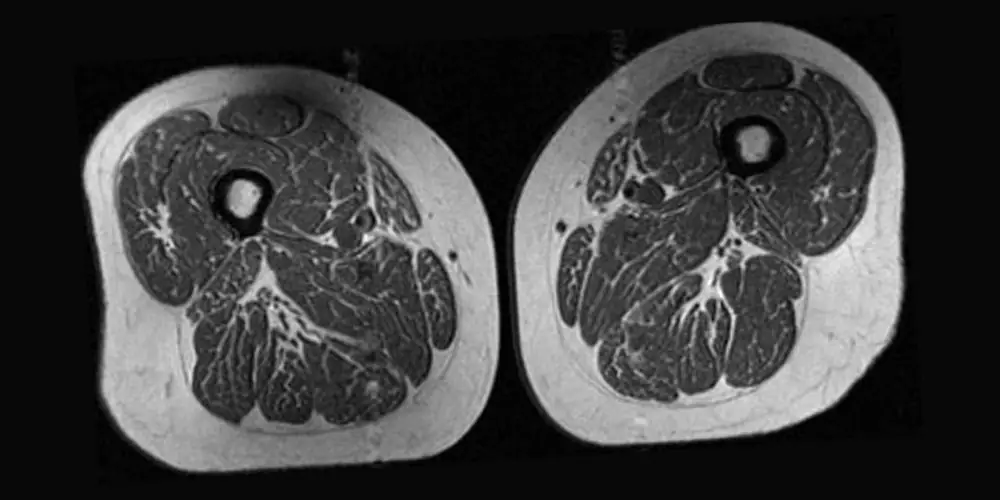
A striking medical image is sparking new attention around diet and muscle health. What appears at first glance like a premium cut of heavily marbled steak is actually an MRI scan of a human thigh.
The scan belongs to a 62-year-old woman whose diet drew 87% of annual calories from ultraprocessed foods.
The visual detail shows streaks of fat woven through muscle tissue, raising concerns about what everyday food choices may be doing inside the body.
MRI Images Showing Fat Inside Muscle Tissue
The scan shows intramuscular fat, a condition in which fat accumulates between and within muscle fibers. This isn’t visible from the outside, yet it can quietly change how muscles function.
Dr. Zehra Akkaya, a researcher and consultant in the Clinical and Translational Musculoskeletal Imaging Research group at the University of California, San Francisco, described the participant’s eating pattern clearly:
“This participant’s diet was mainly comprised of cold cereals, chocolate candy or candy bars, regular soft drinks or bottled sugary drinks,” said Dr. Zehra Akkaya.
A second participant, a 61-year-old woman, showed a similar pattern, though less severe. About 29% of her diet came from ultraprocessed foods, and her muscle scans reflected lower fat infiltration.
Even before visible joint issues appeared, changes in muscle quality were already present. Akkaya noted:
“It was especially concerning because these individuals — scanned at a time when they had no signs of knee osteoarthritis — already showed compromised muscle quality,” Akkaya said.
Ultraprocessed Foods and Rising Health Risks

Ultraprocessed foods have been strongly associated with several long-term health risks.
Studies link high consumption to weight gain and obesity, along with an increased likelihood of type 2 diabetes and cardiovascular disease. Evidence also points to potential connections with certain types of cancer, mood-related issues such as depression, and an overall reduction in lifespan when these foods dominate the diet.
Data from the US Centers for Disease Control and Prevention shows that more than 50% of calories consumed by adults in the United States come from ultraprocessed foods. Among children, that figure rises to 62%.
These foods often include packaged snacks, sugary drinks, instant cereals, processed sweets, and ready-to-eat meals designed for long shelf life rather than nutritional balance.
Fat In Muscle and Link to Knee Health
Fat infiltration inside muscle tissue does more than alter appearance on scans. It interferes with muscle strength and repair. Fat cells can block proper regeneration of muscle fibers, weakening the entire system over time.
Weak thigh muscles are closely tied to knee osteoarthritis, a joint condition affecting nearly 375 million people globally. Once considered a condition of older adults, recent findings show more than half of new cases appear in people under 55, influenced partly by rising obesity rates.
Dr. Akkaya explained the role of thigh muscles in joint stability:
“Thigh muscles are crucial for knee joint stability, and any loss in their strength or tone can increase mechanical stress on the joint — particularly in obese individuals, where excess body weight amplifies this burden,” Akkaya said. “Our group and others have previously established strong links between muscle strength, quality, function, and knee osteoarthritis development.”
Muscle Weakness Can Affect the Body
The presence of fat within a single muscle group is rarely isolated. According to Dr. Miriam Bredella, director of the Clinical and Translational Science Institute at NYU Langone Health, similar changes often appear across multiple muscle groups.
“It’s a systemic process, so it’s not just in the thigh. You can look at other muscles — the calves, the shoulders, the abdomen — and they will look similar,” said Dr. Miriam Bredella.
She also pointed out how reduced muscle quality affects recovery and medical outcomes:
“If you are in the hospital, muscle weakness increases your length of stay. If you have surgery, it’s a negative predictor of outcomes,” Bredella said. “We’ve done a lot of studies in patients with cancer. It increases surgical complications, tumor recurrence — it is bad.”
Inside the Study
The findings come from a study published in the journal Radiology on Tuesday. Researchers analyzed MRI scans from 615 participants enrolled in the Osteoarthritis Initiative, a nationwide study focused on preventing and treating knee osteoarthritis.
All participants were free of knee osteoarthritis symptoms at the time of imaging. The average age was 60, with an average BMI of 27.
BMI ranges used in the study context include:
25 to 29.9: overweight
30 to 34.9: obesity
35 to 39.9: class 2 obesity
40 and above: class 3 obesity (severe obesity)
One comparison stood out. A 61-year-old woman consuming 29.5% ultraprocessed food had a BMI of 32.6 and a lower activity score. Another woman with a BMI of 31.8 consumed 87.1% ultraprocessed food.
Despite similar body weight, the second participant showed significantly higher fat infiltration in thigh muscles.
Diet Patterns Linked to Muscle Fat
Dr. Thomas Link, senior author of the study and professor at UCSF Department of Radiology and Biomedical Imaging, highlighted a key observation:
“Throughout the study, the more ultraprocessed foods a person consumed, the more intramuscular fat they had in their thigh muscles, regardless of caloric intake,” he said.
This suggests that calorie count alone may not explain muscle changes. Food quality appears to play a separate role in how muscle tissue responds over time.
Still, researchers stress that the study shows an association rather than a direct cause. Dr. Bredella added context:
“It was a strong association,” Bredella said. “But we have no idea how long you have to eat ultraprocessed food for this to happen to muscles. If you just stop eating those foods, would it go away?”
She also noted a positive angle:
“What we do know is that if you have fat infiltration of muscle and you start exercising and eating healthy, you can definitely improve your muscle quality,” she said. “It’s much easier for younger people than older people, but it can be done.”
Movement That Supports Muscle Health
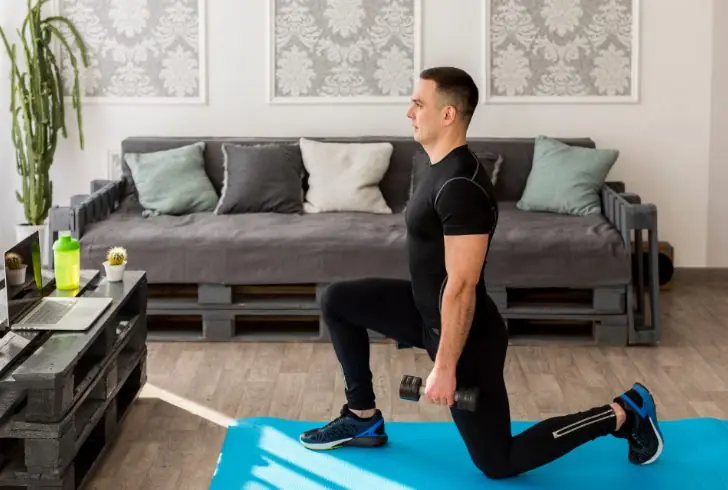
Experts suggest focusing on consistent, low-impact movement paired with whole-food eating patterns.
Dr. Link advises avoiding high-impact sports: “We don’t recommend high-impact exercise because that can destroy the knee joint. Low-impact exercise is best.”
Useful movement patterns include:
- Wall squats for quadriceps strength
- Step-up box exercises
- Standing leg lifts and inner thigh lifts
- Calf and heel raises
- Strength training with weights
- Elliptical training, which Dr. Link described as especially effective in supporting knee health
Food choices play an equally important role. Dr. Bredella emphasized the value of simple, whole meals prepared at home:
“Muscles need adequate protein, but turning to ultraprocessed protein bars and supplements isn’t the answer,” she said. “A lot of these protein bars are just full of sugar and not really healthy, contrary to what is advertised on the label.”
Everyday Steps That Reduce Intake
Small adjustments in daily habits can reduce dependence on ultraprocessed foods:
- Check ingredient labels and opt for simpler choices, such as plain yogurt with fresh fruit instead of flavored versions
- Include whole grains, beans, lentils, vegetables, and fruits in fresh, frozen, or water-packed forms
- Replace sugary beverages with water
- Prefer local cafés or restaurants over fast-food chains when eating out
MRI findings from recent studies point to a subtle but important shift happening within muscle tissue in people consuming high levels of ultraprocessed foods. Fat infiltration in thigh muscles appears to correlate with reduced muscle quality, weaker joint stability, and a higher long-term risk of conditions such as knee osteoarthritis.
While the research does not establish a direct cause-and-effect relationship, the association between dietary patterns and muscle health remains consistent.
Balanced meals centered on whole foods, combined with low-impact strength-based exercise, continue to offer the strongest support for preserving muscle function and joint stability across different age groups.