The AI boom has a problem. A big one. Training and running advanced models burn through electricity at a wild pace. Data centers already strain power grids, drain water supplies, and spark local pushback. Now imagine what happens as AI keeps evoloving.
So, tech giants and deep-pocketed founders are looking up. Literally. The idea of putting AI data centers in orbit has jumped from sci-fi chatter to real tests and launch schedules. Companies are no longer asking if it can work. They are racing to prove who can make it work first.
Why Tech Wants AI Data Centers in Space?
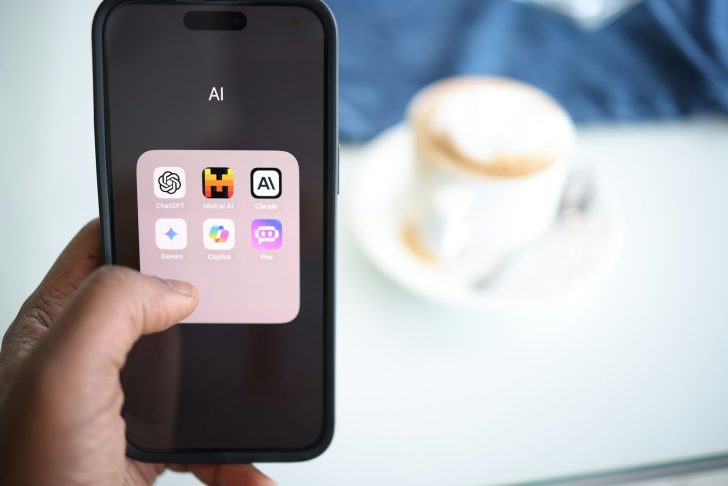
Solen / Unsplash / AI systems crave a lot of energy. On Earth, that energy comes with limits. Power plants take years to build. Cooling systems gulp water.
Local governments push back when data centers move in. Space offers a tempting escape hatch.
In orbit, solar energy is steady and strong. Satellites in sun-synchronous paths can soak up sunlight almost nonstop. Solar panels up there can produce many times more power than panels on the ground.
Cooling is another huge draw. Data centers on Earth rely on water or massive chillers to dump heat. In space, heat can radiate away into the cold void. Infrared panels do the work. No rivers needed. No drought worries. That alone makes space-based compute sound attractive to AI builders under pressure.
The pitch gets even sharper when cost enters the picture. Startups like Starcloud claim orbital energy could end up far cheaper than grid power. If launch prices keep falling, space could compete with Earth on dollars, not just dreams.
Who is Pushing This Race Forward?
Google has laid out one of the clearest plans so far. Its Project Suncatcher aims to build a cluster of 81 solar-powered satellites. These would fly in low Earth orbit and stay locked in sunlight as much as possible. Each satellite would carry Google’s own Tensor Processing Units, the same chips that power its AI on Earth.
The company plans to link these satellites with laser-based optical connections. That setup allows fast, high-bandwidth data flow between machines in space. Google says lab tests show its TPUs can handle radiation better than expected. It has also partnered with Planet to launch two prototype satellites by early 2027.
Starcloud, backed by Nvidia, has already moved faster. In November 2025, it launched Starcloud-1. The satellite carries an Nvidia H100 GPU, making it the most powerful computing system ever sent into orbit. The company also successfully trained a small AI model in space and ran Google’s Gemma language model up there.
That was a major proof point. It showed that real AI inference can happen off Earth. Starcloud is now aiming much bigger. Its long-term plan calls for a 5-gigawatt orbital data center. It also plans to launch Nvidia’s Blackwell platform into space by October 2026. That timeline alone has caught the industry’s attention.
Elon Musk’s SpaceX and Jeff Bezos’s Blue Origin are both circling this idea. Reports suggest SpaceX is exploring AI payloads on future Starlink satellites. Blue Origin has had teams working quietly on orbital data center tech for over a year.
Big Challenges Hanging Over Orbital AI
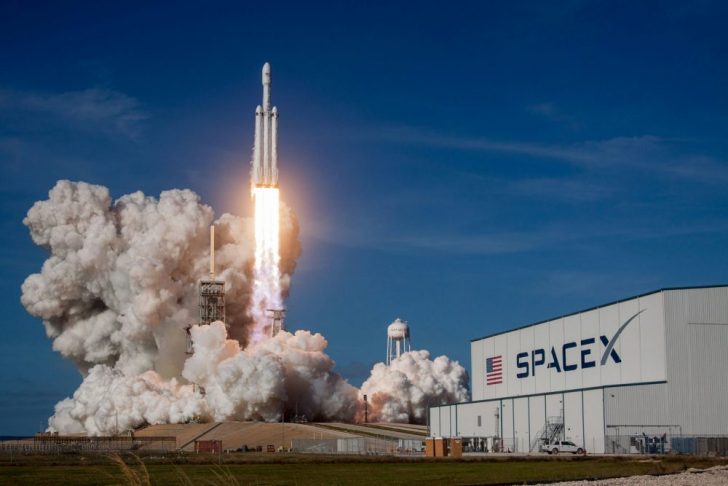
SpaceX / Unsplash / For all the excitement, this push faces real risks. Space is crowded and getting worse. Low Earth orbit is packed with satellites, old rocket parts, and random debris.
Everything moves at extreme speeds. One bad collision can trigger a chain reaction.
Large AI constellations would fly in tight formations. Google’s design puts satellites just hundreds of meters apart. That requires perfect coordination and constant monitoring. A single failure could put the whole system at risk. Some scientists already call popular orbits a minefield.
Environmental concerns also loom. While orbital data centers avoid local pollution, the full picture is murky. Rocket launches release emissions high in the atmosphere. Satellite reentry burns up hardware and dumps particles into sensitive layers of air. A study known as Dirty Bits in Low-Earth Orbit warns that this could harm the ozone layer if scaled too far.